
What Makes an Aluminum Alloy Lightweight Stage Hoist Actually Safe?
I see this phrase in catalogs all the time: "aluminum alloy lightweight stage hoist." Rental managers read it. They compare product weights. They assume lighter means better. Then I get the email six months later asking why the housing cracked or why the control board stopped working.
Aluminum alloy lightweight is not a material choice. It is a design problem. Weight reduction only works when you optimize the casting structure, integrate the control system, and maintain load-bearing geometry. Cutting weight by removing components or thinning the walls creates hidden failure points that rental companies pay for later.
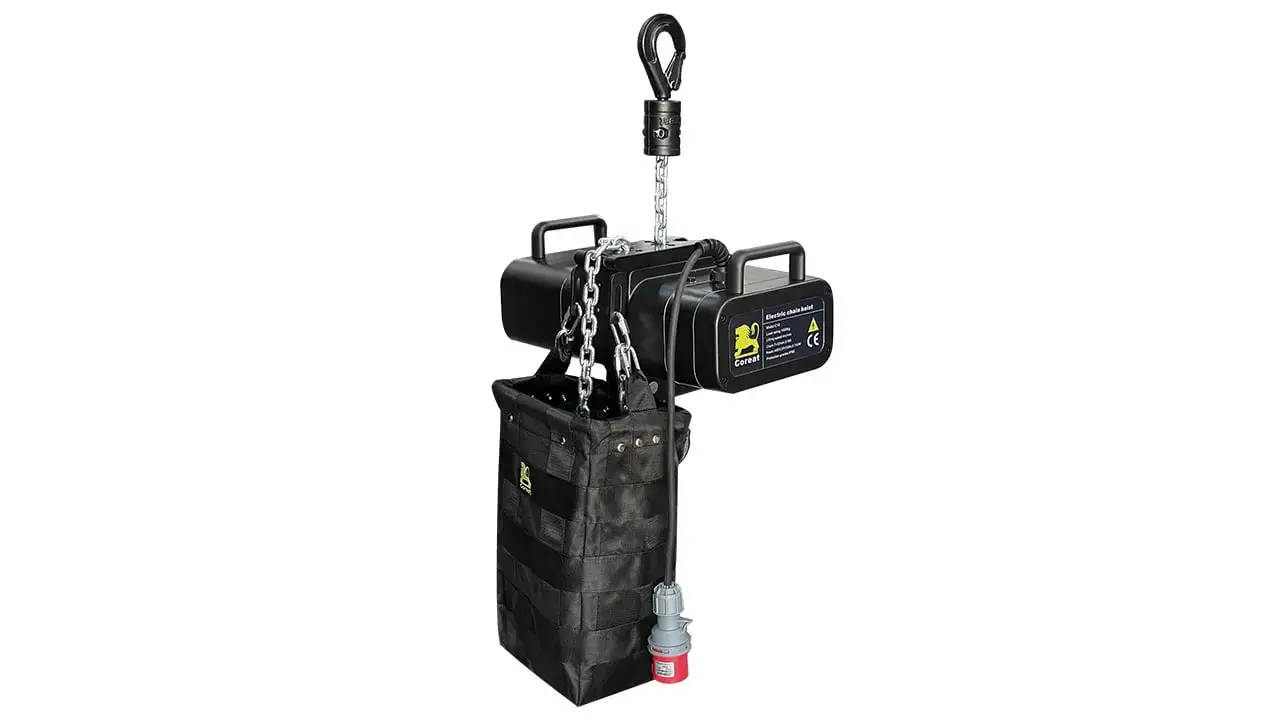
I work on these designs at Coreat Stage. I have held both types of hoists in my hands. The cast aluminum models we produce feel solid even though they weigh less. The extrusion-based copies feel hollow because they are hollow. I am going to explain why that difference matters for your rental business and how to tell the products apart.
Why Does Casting Process Matter for Stage Hoist Weight?
Most rental buyers do not ask about casting versus extrusion. They see "aluminum alloy" on both spec sheets and assume the difference is just supplier preference. I used to think the same thing before I started working on hoist housing design.
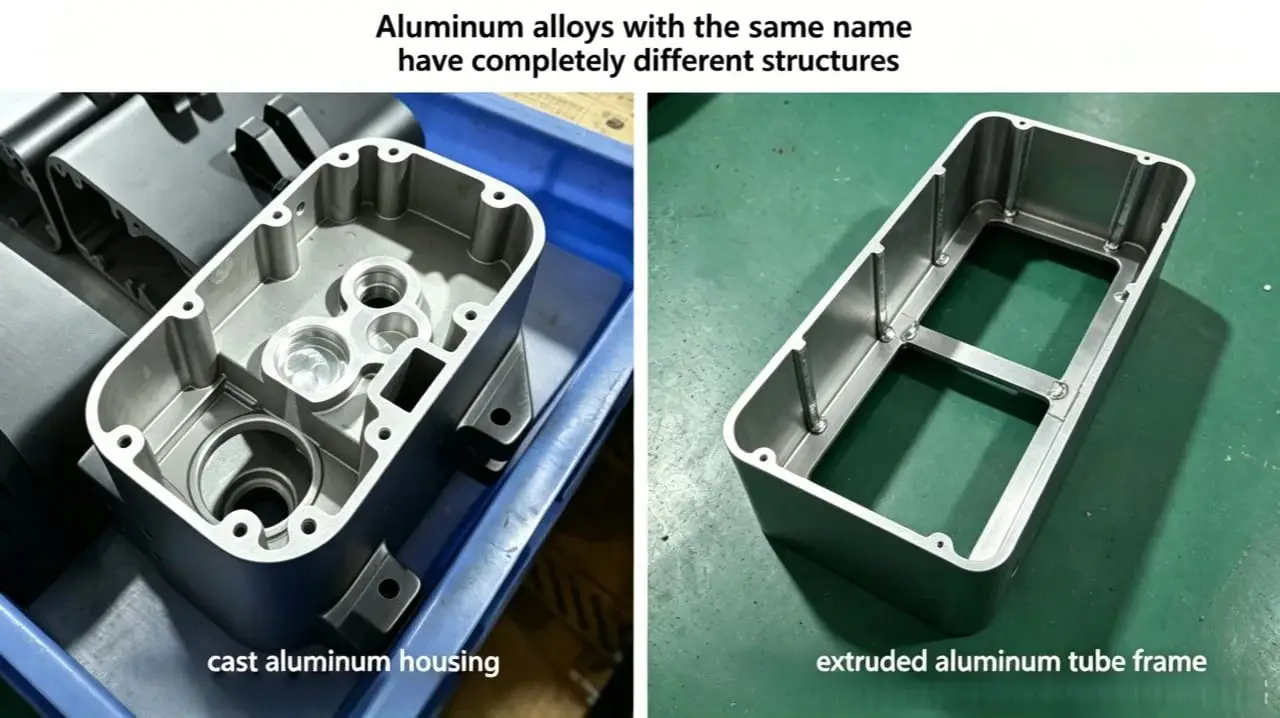
Casting allows you to create complex internal geometries that follow the load path1. Extrusion forces you to push aluminum through a die, which limits you to simple cross-sections. When you design a lightweight hoist using casting, you can add reinforcement ribs where stress concentrates and thin the walls where load is lower. When you use extrusion, you get uniform wall thickness and no internal structure.
Why Extrusion Limits Structural Optimization
Extrusion works by heating aluminum and forcing it through a shaped die2. The die profile determines the cross-section. You can make hollow tubes or channels or angles. You cannot make complex three-dimensional shapes with varying thickness.
This matters because stage hoists hang loads. The motor housing carries torque from the motor to the gearbox. The mounting points transfer the suspended load to the structure above. The control board sits inside and needs protection from vibration and impact. These are three-dimensional problems.
I compared two 500 kg hoists last year. One used our cast aluminum housing. The other used extruded aluminum tubes welded into a frame. Both weighed about 12 kg. The cast housing had thick walls around the mounting eyes and thin walls on the side panels. The extruded frame had the same wall thickness everywhere because the extrusion die cannot vary thickness along the length.
We did not do laboratory tests. I just suspended both hoists and looked at where they flexed under load. The extruded frame bent slightly at the welds. The cast housing stayed rigid. Six months later the rental company told me the extruded hoist developed cracks at the weld points. The cast hoist is still working.
How Casting Enables Load Path Design
When you cast aluminum, you pour molten metal into a mold. The mold can have any shape. You can add ribs. You can create pockets. You can vary wall thickness in different areas. This lets you follow the actual load path.
I design the housing by tracing where forces go. The suspension point carries the full load plus dynamic forces from starting and stopping. I make the walls thicker there. The motor mounts transfer torque but not suspended weight. I make those sections strong enough for the motor but not as thick as the suspension point. The side panels just protect the internal components. I make them thin to save weight.
This is not possible with extrusion. You get one cross-section for the entire length. If you need thick walls at the mounting point, you get thick walls everywhere. If you make the walls thin to save weight, the mounting point gets thin too.
Material Grade and Heat Treatment
Not all aluminum alloy behaves the same way. I use casting-grade aluminum with specific silicon content and heat treatment. The silicon makes the aluminum flow better during casting and reduces shrinkage3. The heat treatment increases strength.
Extrusion uses different aluminum grades. Extrusion alloys need to be soft enough to push through the die without cracking. They usually have less strength after forming. Some manufacturers skip the heat treatment step to save cost. You end up with softer aluminum that deforms under cyclic loading.
I cannot tell you the exact alloy grades we use because that is internal engineering data. But I can tell you that casting-grade aluminum designed for structural parts costs more than extrusion-grade aluminum. When you see two "aluminum alloy lightweight" hoists with very different prices, material grade and heat treatment explain part of the gap.
What Role Does the Control System Play in Weight Distribution?
Most rental buyers focus on the housing material. They miss the control system entirely. But the control system accounts for a significant portion of the total weight. More importantly, the control system determines whether the hoist is a professional product or a stripped-down copy.
Integrated control boards add weight but they also add safety features, smooth acceleration curves, and protection against phase loss or overload. Low-cost manufacturers remove the control board to cut weight and cost. They replace it with a simple contactor that just connects power to the motor. This saves maybe 1 kg but removes all the electronic safety systems.
Why Integration Matters for Rental Applications
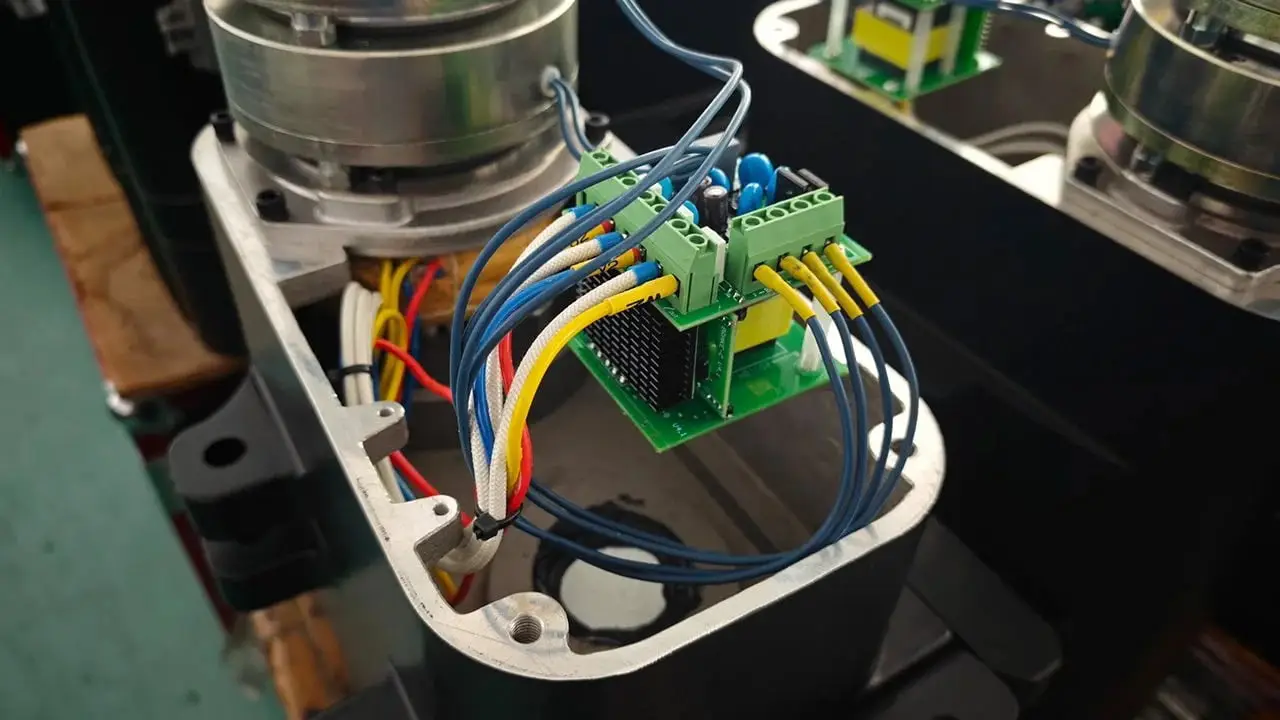
I include the control board inside the housing for three reasons. First, it protects the electronics from impact and moisture. Second, it keeps the wiring short and reduces electromagnetic interference. Third, it allows me to optimize the internal layout so the weight distribution stays balanced.
When you remove the control board and use an external contactor, you make the hoist lighter but you also make it less reliable. The external contactor sits in a separate box that can be damaged during transport. The longer cable runs between the contactor and motor create more failure points4. The motor starts and stops abruptly because there is no soft-start circuit.
I visited a rental company in Eastern Europe two years ago. They bought 20 hoists from a low-cost supplier. The hoists weighed 10 kg each. Our equivalent model weighs 12 kg. They saved 2 kg per unit and felt proud of the procurement decision.
Six months later half the hoists had burned-out motors. The external contactors had no phase protection. When one phase dropped during a show, the motors overheated and failed5. The rental company had to replace the motors. They also had to refund the client for the show downtime. The 2 kg weight saving cost them thousands of euros in repairs and lost business.
Control Board Features That Add Weight but Save Money
The control board I integrate includes several circuits that each add a few grams but prevent specific failure modes:
| Feature | Weight Impact | Failure Prevention |
|---|---|---|
| Phase loss protection | +50g | Motor overheating from single-phase operation |
| Overload sensing | +30g | Gearbox damage from excessive load |
| Soft-start circuit | +80g | Mechanical shock to chain and brake |
| Temperature monitoring | +40g | Motor burnout from sustained overload |
| Emergency stop integration | +60g | Operator safety during malfunction |
These components cost money. They add weight. But they prevent failures that cost far more than the initial savings.
Weight Distribution and Rigging Balance
When I design the housing, I place the control board opposite the motor to balance the weight. This keeps the hoist from tilting when suspended. Rental crews appreciate this because the hoist hangs straight without adjustment.
If you remove the control board and use an external contactor, the weight shifts toward the motor side. The hoist tilts slightly. This puts uneven load on the suspension point and creates side forces on the chain6. Over time this accelerates wear on the chain guides and brake mechanism.
I have seen rental managers complain about "inconsistent chain wear" without realizing the cause is weight imbalance from removed control boards. They replace chains more frequently. They blame the chain quality. They miss the root cause entirely.
How Do You Calculate the Real Cost of Lightweight Design?
Rental companies think about weight in terms of truck capacity and rigging load calculations. This is correct but incomplete. Weight also affects maintenance costs, replacement part expenses, and usable lifespan.
A hoist that weighs 2 kg less but requires motor replacement after 500 hours instead of 2000 hours costs more to operate. A housing that saves 1 kg by using thinner walls but cracks after two years costs more than a properly designed cast housing that lasts ten years. Real lightweight value comes from optimizing the entire system, not just cutting weight wherever possible.
Transportation and Logistics Savings
I understand why rental companies care about weight. You pay for trucking by total vehicle weight7. You maximize revenue by fitting more gear per truck. Every kilogram matters when you are loading a 40-foot container or calculating how many hoists fit on a truck without exceeding axle limits.
I worked with a rental company in Brazil that calculated their actual savings from switching to lightweight hoists. They ran 50 shows per year requiring 40 hoists each. With their previous hoists weighing 15 kg each, they needed two trucks per show for the rigging equipment. With our 12 kg hoists, they fit everything on one truck with capacity left over.
They saved fuel costs. They saved driver wages. They reduced setup time because they did not need to coordinate two vehicles. They calculated the savings at about $800 per show. Over 50 shows per year that added up to $40,000.
But they also tracked maintenance costs. The lightweight hoists did not require more maintenance than their previous equipment. The motors lasted just as long. The chains wore at the same rate. The housing showed no cracks or deformation after two years of heavy use.
This is the difference between engineered weight reduction and weight cutting. Engineered reduction uses better material and optimized structure to remove unnecessary mass while maintaining performance. Weight cutting removes components or reduces structural integrity to hit a target weight regardless of consequences.
Rigging Load Calculations
Stage riggers calculate total loads including the weight of the lifting equipment itself8. A lighter hoist means you can suspend more payload before reaching the safe working load of the rigging structure.
I installed a system in a theater in Southeast Asia with a 2000 kg safe working load per rigging point. The client wanted to suspend as much LED screen as possible. With 15 kg hoists, they could hang about 1850 kg of screen per point after accounting for the hoist weight, chain weight, and safety factor. With our 12 kg hoists, they gained 3 kg of payload capacity per point.
This sounds small. But they had 20 rigging points. That extra 60 kg total meant they could add another row of LED panels. They charged the client for the additional screen area. The lightweight hoists paid for themselves on that single project.
But this only works if the lightweight hoist can actually handle the load. If you buy a hoist that weighs 10 kg because the manufacturer removed structural reinforcement, you cannot use the full rated capacity safely. The weight saving becomes meaningless because you need to derate the hoist to avoid failures.
Maintenance and Replacement Cost
I track warranty claims and maintenance requests. Cast aluminum hoists with integrated control systems have lower failure rates than extrusion-based copies. This is not surprising but rental companies often miss this when making purchasing decisions.
The cast housing resists impact damage better. When a rental crew drops a hoist during load-in, the cast housing dents but rarely cracks. Extruded housings with thin walls crack more easily. A cracked housing means the entire unit goes to repair. A dented cast housing stays in service.
Control board failures happen more often with external contractors. The separate contactor box gets damaged during transport. Cables between the contactor and motor develop faults. With integrated control boards, failures happen less frequently because everything is protected inside the main housing.
I calculated the total cost of ownership for a rental company in Central Europe. They compared our cast aluminum hoists to a lower-cost competitor using extruded housings and external contactors:
| Cost Factor | Coreat Cast Aluminum | Competitor Extruded |
|---|---|---|
| Purchase price per unit | $2,400 | $1,800 |
| Transport cost per show | $15 | $18 |
| Maintenance per year | $120 | $280 |
| Expected lifespan | 10 years | 6 years |
| Total cost over 10 years | $3,720 | $5,280 |
The lower purchase price looked attractive initially. But when they factored in higher transport costs from the heavier weight, higher maintenance costs from more frequent failures, and shorter lifespan requiring earlier replacement, the total cost was higher.
This is why I tell rental buyers to ask about the casting process, control system integration, and structural design. The catalog weight number means nothing without context about how the manufacturer achieved that weight.
What Questions Should Rental Buyers Ask Suppliers?
I get specification requests from rental companies regularly. Most ask about rated capacity, lifting speed, and price. Very few ask about the questions that actually determine product quality and long-term value.
Ask whether the housing uses casting or extrusion. Ask where the control board is located and what protection features it includes. Ask about wall thickness at mounting points and load-bearing areas. Ask for documentation showing the structural design process, not just the final weight number. These questions separate professional manufacturers from suppliers who copied a product without understanding the engineering.
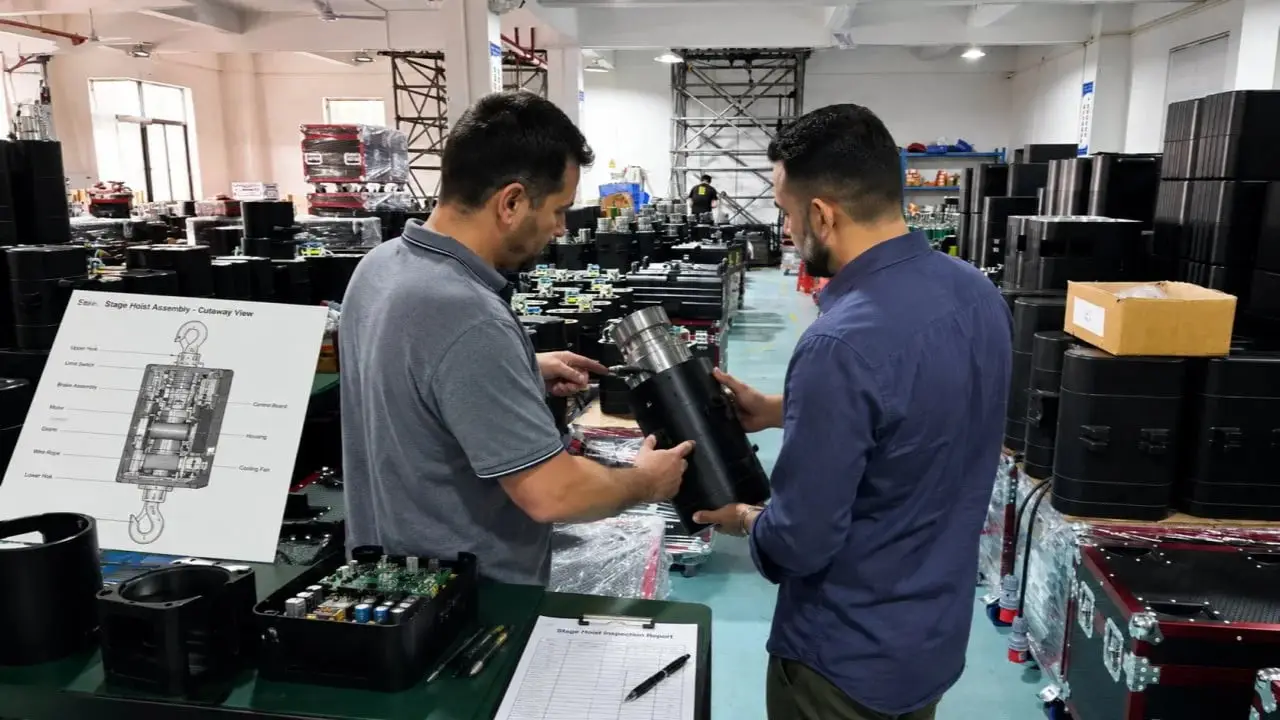
Casting Process and Alloy Specification
When you see "aluminum alloy lightweight" in a catalog, ask what casting process the manufacturer uses. Sand casting, die casting, and gravity casting produce different results9. Ask what alloy grade they use and whether they heat-treat after casting.
If the supplier cannot answer these questions, they probably did not design the product. They copied someone else's design and contracted a generic foundry to make housings. They have no control over material quality or process consistency.
We use gravity die casting with specific aluminum-silicon alloy. I can show you the foundry process and explain why we chose this method. I can tell you the cooling rate and heat treatment parameters. This is not secret information for qualified buyers. If a supplier treats basic manufacturing questions as proprietary secrets, they probably do not have good answers.
Control System Integration
Ask where the control board is located. If the supplier says the contactor is external, ask why. There are legitimate design reasons for external control in some applications, but for standard stage hoists, external control usually indicates cost cutting.
Ask what protection features the control system includes. Phase loss protection, overload sensing, and temperature monitoring should be standard10. If the supplier lists these as optional upgrades, they are selling a basic product and charging extra for safety features.
Ask to see the internal layout. A properly designed hoist has organized cable routing, secure component mounting, and logical access for maintenance. A copied design has tangled wiring, components held with zip ties, and poor accessibility.
Structural Design Documentation
Ask for drawings showing wall thickness variation and reinforcement rib locations. Ask how the manufacturer determined the load path and why they chose specific dimensions.
Professional manufacturers can show you structural analysis and explain design decisions. They can tell you why one area is thicker than another. They can explain trade-offs between weight reduction and structural integrity.
Generic suppliers will show you a dimension drawing with no information about internal structure. They cannot explain design choices because they did not make any choices. They copied a competitor's external dimensions and sent them to a foundry.
Warranty Terms and Spare Parts Availability
Ask about warranty coverage for structural failures versus wear items. A manufacturer confident in their casting quality will warranty the housing against defects. A supplier selling extrusion-based copies will limit warranty to motor and gearbox only, excluding structural components.
Ask about spare parts cost and availability. Control boards, motors, and gearboxes will eventually need replacement. If replacement control boards cost 40% of a new hoist price, the initial purchase saving disappears quickly. If spare parts take three months to arrive from China, your rental inventory sits idle while you wait.
We stock common spare parts and ship within one week. Control board replacement costs about 15% of the hoist price. Motor replacement costs about 20%. This is possible because we manufacture these components or have direct relationships with component suppliers.
Generic suppliers buy components from multiple sources and change suppliers when they find lower prices. This means spare parts compatibility changes between production batches. The control board in a hoist you bought last year might not be available anymore because the supplier switched to a different manufacturer.
Conclusion
Aluminum alloy lightweight means nothing without casting process, control system integration, and structural design details. Ask suppliers how they achieved the weight reduction, not just what the final weight is. Calculate total cost including transportation, maintenance, and lifespan, not just purchase price. Real lightweight value comes from engineering the entire system, not cutting corners wherever possible.
"Research on the extrusion characteristics for the geometry of ... - PMC", https://pmc.ncbi.nlm.nih.gov/articles/PMC11965490/. Manufacturing engineering literature confirms that casting processes allow three-dimensional complexity and variable wall thickness, while extrusion produces constant cross-sections along the extrusion axis, limiting structural optimization possibilities. Evidence role: mechanism; source type: education. Supports: the geometric design capabilities and limitations of casting versus extrusion manufacturing processes. Scope note: General manufacturing principle; specific application to stage hoist design requires engineering judgment ↩
"Extrusion - Wikipedia", https://en.wikipedia.org/wiki/Extrusion. Materials engineering references define extrusion as a process where heated metal is forced through a die opening to produce lengths of constant cross-section, confirming the fundamental process description. Evidence role: definition; source type: encyclopedia. Supports: the basic mechanism of the aluminum extrusion manufacturing process. ↩
"The Role of Silicon During Solidification Process of Cast Al-Si-Mg ...", https://pmc.ncbi.nlm.nih.gov/articles/PMC12609102/. Metallurgy textbooks document that silicon additions to aluminum improve fluidity during casting and reduce solidification shrinkage, making aluminum-silicon alloys preferred for complex cast components. Evidence role: mechanism; source type: education. Supports: the metallurgical effects of silicon additions to aluminum casting alloys. ↩
"[PDF] Correlation of Electrical Cable Failure with Mechanical Degradation.", https://www.nrc.gov/docs/ML0622/ML062260360.pdf. Reliability engineering principles indicate that longer cable runs increase exposure to mechanical damage, environmental factors, and connection points, each representing potential failure modes, though proper installation and protection can mitigate these risks. Evidence role: general_support; source type: education. Supports: the relationship between cable length and potential failure points in electrical systems. Scope note: General reliability principle; actual failure rates depend heavily on installation quality, environment, and cable protection ↩
"What causes 3-phase motor overheat? - YouTube",
. Electrical engineering literature confirms that three-phase motors operating on single-phase power draw excessive current in the remaining windings, generating heat that can cause insulation failure and motor burnout if not protected. Evidence role: mechanism; source type: education. Supports: the failure mechanism of three-phase motors operating with phase loss. ↩"[PDF] Chapter 10: Weight and Balance - Federal Aviation Administration", https://www.faa.gov/sites/faa.gov/files/12_phak_ch10.pdf. Structural mechanics principles confirm that eccentric loading in suspended systems creates moment forces and non-uniform stress distribution, potentially accelerating wear on components not designed for lateral loading. Evidence role: mechanism; source type: education. Supports: the mechanical effects of weight imbalance on suspended equipment and load distribution. Scope note: General principle; specific effects depend on magnitude of imbalance and system geometry ↩
"Compilation of Existing State Truck Size and Weight Limit Laws", https://ops.fhwa.dot.gov/freight/policy/rpt_congress/truck_sw_laws/app_a.htm. Transportation regulations and industry practices confirm that vehicle weight affects operating costs through fuel consumption, axle load limits, and regulatory compliance, though freight pricing typically considers both weight and volume. Evidence role: general_support; source type: government. Supports: weight as a factor in commercial transportation costs and regulations. Scope note: Freight pricing is multifactorial; weight is one component alongside volume, distance, and service type ↩
"1926.251 - Rigging equipment for material handling. - OSHA", http://www.osha.gov/laws-regs/regulations/standardnumber/1926/1926.251. Entertainment rigging standards and safety guidelines specify that total suspended load calculations must include the weight of all rigging hardware, lifting equipment, and payload to ensure safe working load limits are not exceeded. Evidence role: expert_consensus; source type: institution. Supports: the requirement to include equipment weight in rigging load calculations. ↩
"Gravity vs. Sand Casting: A Comparison of Two Metal Casting ...", https://www.newayprecision.com/services/gravity-casting/faq-gravity-vs-sand-casting-a-comparison-of-two-metal-casting-processes. Manufacturing engineering texts describe sand casting, die casting, and gravity casting as distinct processes with different tooling costs, dimensional tolerances, surface finishes, and production rates, each suited to different applications. Evidence role: general_support; source type: education. Supports: the existence of distinct casting processes with different characteristics. Scope note: General process differences; specific quality outcomes depend on implementation and quality control ↩
"Electrical safety related work practices applicable to employees ...", http://www.osha.gov/laws-regs/standardinterpretations/1992-01-13-0. Electrical equipment standards and industrial practice guidelines identify phase loss protection, overload sensing, and thermal monitoring as widely implemented motor protection features, though specific requirements vary by application and jurisdiction. Evidence role: expert_consensus; source type: institution. Supports: common motor protection features in industrial applications. Scope note: Industry best practices rather than universal requirements; specific mandates depend on application and local codes ↩
