
How Do You Properly Disassemble and Maintain a Stage Hoist?
Stage hoists fail silently. By the time you notice a problem, the damage is often already done—and in most cases, a wrong repair attempt made it worse.
Maintaining a stage electric chain hoist requires a strict disassembly sequence, entertainment-specific diagnostic logic, and control system awareness. Skipping any step—or applying industrial hoist maintenance logic—can cause irreversible mechanical or electrical damage that makes the unit unrepairable.
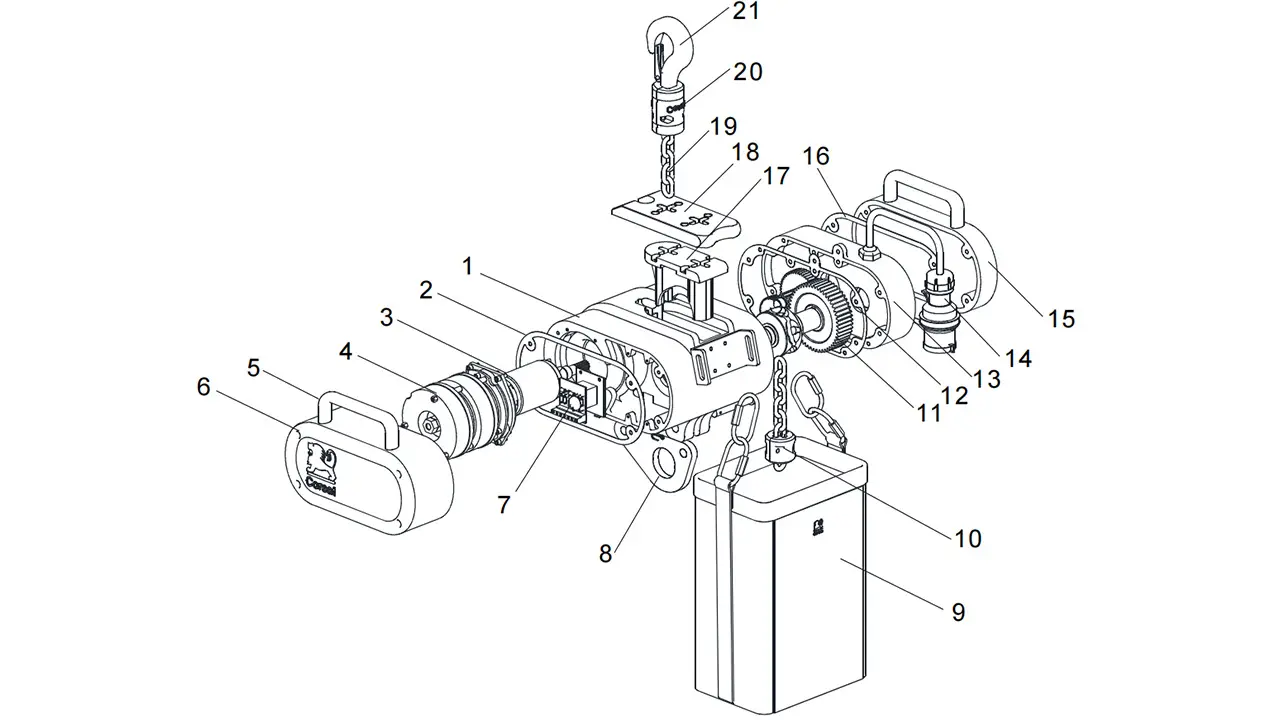
I have seen this happen more times than I can count. A rental company receives a unit with a fault. Their technician opens it up using the same process they use on industrial chain blocks. Within thirty minutes, they have either stripped a thread, cracked a housing, or disconnected a control board without logging the wire positions. The unit goes from repairable to scrap. That is not a rare story. That is a Tuesday.
This article walks through the correct disassembly and maintenance process for stage electric chain hoists. I will cover why the sequence matters, how to approach the control system, and where most teams go wrong.
Why Is the Disassembly Sequence So Important for Stage Hoists?
Most people assume that disassembly just means taking something apart. With industrial hoists, that assumption often works. With stage hoists, it does not.
Stage electric chain hoists use cast aluminum housings, integrated control boards, and precision-fit internal components. These parts are assembled in a specific order under controlled conditions. Reversing that order incorrectly causes misalignment, housing cracks, and bearing damage that cannot be fixed in the field.
The first time I personally witnessed this problem, it was a hoist that came back to us after a customer attempted their own repair. The cast aluminum housing had a hairline crack running from one of the bolt seats. The technician had applied too much torque when trying to remove the end cover without first releasing the internal pressure points. The crack was not visible until we ran the unit under load. It failed at 60% capacity.
The reason this happens so often comes down to one thing: stage hoists look similar to industrial hoists from the outside. The housing bolts are in similar positions. The chain entry points look familiar. So technicians use familiar logic. But the internal layout is completely different.
The Correct Disassembly Sequence for Stage Electric Chain Hoists
| Step | Action | Why It Matters |
|---|---|---|
| 1 | Isolate power completely and discharge any stored electrical energy | Prevents control board damage during opening |
| 2 | Remove the chain bag and unload the chain from the hoist body | Removes load stress from the housing before opening |
| 3 | Document all external cable positions and connector orientations with photos | Ensures correct reassembly of the control system |
| 4 | Remove the control box cover before the main housing | Avoids pulling cables during mechanical disassembly |
| 5 | Release the motor end cover using the correct torque sequence | Prevents uneven stress on the cast aluminum housing |
| 6 | Extract the motor and brake assembly as a single unit | Keeps the brake adjustment intact for reinstallation |
| 7 | Access the gearbox only after full motor removal | Avoids misaligning the gear mesh during partial disassembly |
| 8 | Inspect the load chain and sprocket wheel last | Allows full visual access without obstruction |
Each of these steps depends on the one before it. You cannot safely access the gearbox without removing the motor. You cannot safely remove the motor without releasing the control box first. This is not a suggestion. It is a mechanical requirement built into how these units are designed.
Stage hoists from manufacturers like Chainmaster and units designed to the same standard—including what we produce at Coreat Stage—are built this way by intention. The integrated design improves performance. But it also means the disassembly process is non-negotiable.
How Do You Diagnose Control System Faults Without Causing More Damage?
The control system is where most failed repair attempts begin. It is also the area where the difference between stage hoists and industrial hoists is the largest.
Stage electric chain hoists use integrated control boards that manage speed, load limiting, emergency stop logic, and limit switch feedback in a single unit. Probing these boards with industrial testing methods—or replacing components without reading fault codes first—permanently damages the board and eliminates the diagnostic record.
I want to be direct about something. I have talked to customers who told me their hoist stopped working, so they replaced the control board themselves. When I ask them what fault code the original board was showing, they often say they did not check—or that they did not know boards stored fault codes. In many of those cases, the original board was still functional. The actual fault was a limit switch or a loose encoder connector. They spent money on a new board and still had the same fault after installation.
The control board in a stage hoist is not like an industrial contactor panel. It is a purpose-built electronics unit. It stores operational data. It communicates with the motor, the brake, the encoder, and the limit switches in real time. When something goes wrong, the board knows what it was. You have to read that information before you touch anything else.
Control System Fault Diagnosis: The Right Process
Step 1: Read the fault code before disconnecting anything. Every integrated control board used in professional stage hoists will show a fault state indicator. Some use LED blink codes. Some use digital displays. Some connect to a laptop interface. Know which system your hoist uses before you open the control box.
Step 2: Map the fault to a system, not a component. Fault codes point to a system category—load protection, motion feedback, communication error, or power supply fault. Do not jump to component replacement. First confirm which system the fault belongs to.
Step 3: Test the external sensors before touching the board. Limit switches, encoder cables, and motor temperature sensors all connect to the control board. Most faults that appear to be board failures are actually sensor or cable faults. Test these first with a basic continuity check.
Step 4: Use only recommended replacement components. Stage hoist control boards are designed for specific motor and brake combinations. Replacing a board with a non-matched unit creates timing mismatches between the motor and the brake release. This causes brake wear, chain slip risk, and load holding failures.
| Fault Symptom | Likely Cause | First Check |
|---|---|---|
| Hoist does not respond to up/down command | Limit switch stuck in triggered position | Manually inspect both limit switches |
| Hoist starts then immediately stops | Load limiter fault or encoder signal loss | Check encoder cable continuity |
| Hoist runs but brake stays engaged | Brake release solenoid not receiving signal | Test solenoid coil resistance |
| Intermittent loss of control signal | Control board power supply instability | Check input voltage under load |
| LED fault indicator flashing in sequence | Stored fault code active | Read board diagnostic output |
The control system is the brain of the stage hoist. Treat it that way. Read before you touch. Test before you replace.
What Are the Most Commonly Missed Maintenance Points That Cause Repeat Failures?
Stage hoists do not break randomly. They break in patterns. And those patterns almost always trace back to maintenance points that were missed or skipped because they are not obvious.
The most commonly missed maintenance points in stage electric chain hoists are the load chain lubrication condition, the brake air gap measurement, the limit switch contact surface wear, and the housing bolt torque values. Each of these degrades silently and causes failure under load if not addressed on schedule.
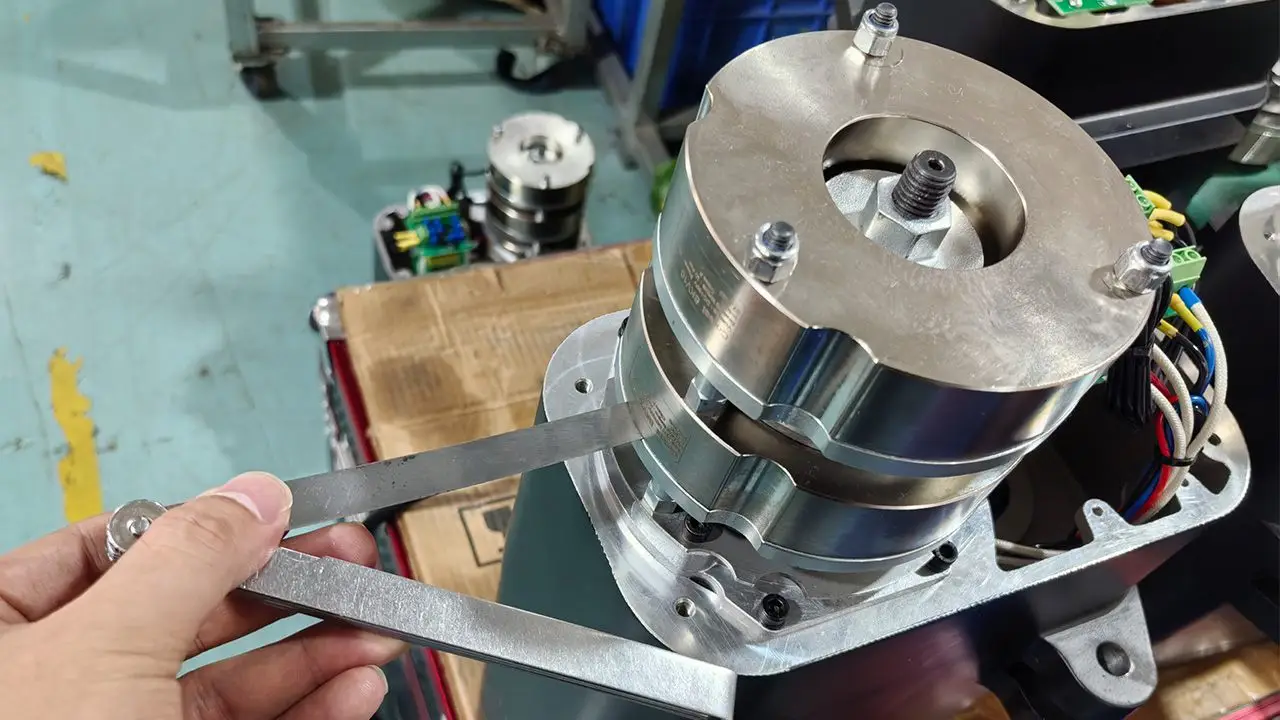
I want to share something from my own service history. We had a client who ran their hoists on a touring production for about eighteen months. The units were high-cycle—sometimes six to eight lifts per day. When they finally sent one unit back for a scheduled inspection, we found that the brake air gap had worn to nearly double the specified value. The brake was still functioning. It was still holding load. But the response time had increased enough that the emergency stop was no longer meeting the required stop distance. That unit should have been inspected at the six-month mark. Nobody got hurt. But it was close.
That story is not unusual. Stage hoist maintenance is not just about fixing what is broken. It is about measuring what is wearing before it becomes a failure.
Key Maintenance Points and Inspection Intervals
Load Chain Condition and Lubrication The load chain is the most mechanically stressed component in the hoist. It should be inspected for elongation using a pitch measurement tool at every scheduled service. Chain elongation beyond 2% of the nominal pitch length means the chain must be replaced—not lubricated further. Lubrication at that point only masks the wear. The sprocket wheel must also be inspected at the same time. A worn sprocket accelerates chain wear even after a new chain is installed.
Brake Air Gap Measurement The electromagnetic brake in a stage hoist operates by releasing when current is applied and engaging when power is removed. The air gap between the brake disc and the electromagnet face determines the response time and holding force. This gap increases as the brake disc wears. Measuring the air gap requires a feeler gauge and access to the brake chamber—which means partial disassembly. It cannot be assessed from outside the unit. Most manufacturers specify a maximum air gap of around 0.3mm to 0.5mm depending on the unit design. Once that value is exceeded, the brake must be adjusted or the disc replaced.
Limit Switch Contact and Position Verification The upper and lower limit switches define the safe travel range of the hoist. Over time, the contact surfaces wear and the switch positions drift. A limit switch that triggers 50mm later than it should can allow the hook block to strike the hoist body under fast travel. This is a structural impact event, not just a control fault. Limit switch position must be verified physically, not just electrically.
Housing Bolt Torque Check Cast aluminum housing bolts are torqued to specific values during assembly. Vibration from repeated operation loosens these bolts over time. A loose housing bolt does not immediately cause a visible fault. But it allows micro-movement between housing sections, which leads to fretting corrosion on the mating surfaces and eventual housing misalignment. Checking torque values requires a calibrated torque wrench. It takes less than ten minutes per unit. It is almost never done in the field.
| Maintenance Item | Inspection Interval | Action If Out of Specification |
|---|---|---|
| Load chain pitch elongation | Every 6 months or 500 operating hours | Replace chain and inspect sprocket |
| Brake air gap | Every 6 months or 500 operating hours | Adjust gap or replace brake disc |
| Limit switch position and contact | Every 6 months | Reset position, replace contacts if worn |
| Housing bolt torque | Every 12 months | Retorque to manufacturer specification |
| Gear oil level and condition | Every 12 months | Drain and refill with specified grade |
| Control board connector integrity | Every 12 months | Reseat all connectors, inspect for corrosion |
Following this schedule does not guarantee zero failures. But it eliminates the category of failures that are entirely preventable—which, in my experience, accounts for more than half of all field breakdowns.
Conclusion
Stage hoist maintenance is not complicated, but it is specific. Follow the disassembly sequence, read the fault codes before touching the control board, and inspect the components that wear silently before they fail under load.
